The Penny is worth 1 cent. The Nickel is worth 5 cents. The Dime is worth 10 cents. The Quarter is worth 25 cents.
The primary consideration in this classification is the risk that each hyperplasia presents for progression to endometrial cancer (a good pneumonic to remember the approximate risks is 'penny. Make coin wrapping easy with the Royal Sovereign preformed Kraft paper coin wrappers. One end of the wrapper is crimped for easy filling by hand or by coin sorting machine. Assorted pack contains 126 wrappers of each coin denomination: Penny, Nickel, Dime & Quarter. For many people, finding coins: pennies, dimes or nickels, for example, is a common sign of support from their guardian angels. Often appearing at opportune moments, the spiritual significance of a penny “falling from heaven” can range from signs of imminent good fortune to symbols of angelic protection.
Coin Values Moving with Precious Metals: Up-Dated 2/8/2021: Gold $1813 | Silver $26.90
Dime values for coins dated 1964 or earlier have the current silver price as their base value. At over $26.90 per ounce, all silver dimes are worth at least $1.80 each as of 2/8/2021 .
Unlimited spins coin master. Using a step by step method all important details of these old dimes are identified. Design series, varieties within the series are imaged. Dates and mintmark varieties are listed on value charts. And the important, grading condition, is judged using video, images and description to compare your coins.
Minted since 1796 there are many rare dates, mint marks and scarce dime varieties for you to discover in your box of old coins. These old dime values often reach into the hundreds of dollars.
Steps Leading to Value:
- Step 1: Recognize the Different Series of Dimes - US dimes span many design series, dating back to the beginnings of US coinage. Rarity from one series to the next is often large. Recognizing the series is important and narrows value.
- Step 2: Date and Mintmark Variety - Within the different dime series, date and mintmark combination are next identified accurately.
- Step 3: Grading Condition - Values on the charts cover a range depending on preservation of a coin. Judging condition is done with a close inspection and comparing to standards for the grade.
- Step 4: Special Qualities - Because of the age, many different qualities found on the dime determine collectability and higher value. Bullion base value is a strong start.
How to determine dime values starts with identifying the design series. Examine your coin and compare to the following images to find a match.
Note: Images within blue borders are Links to each dime series and values charts.
Step 1: | Recognize the Different Series of Dimes
Historically important and rare. Turn up one of these in your group and you hold a coin any collector desires. High initial value that quickly rises into the hundreds depending on date and condition. Handle your coin gently and compare to the grading images and value chart.
A stately design admired by avid collectors. Maintaining constant demand and solid values for these old Seated Liberty dimes. With numerous rare dates and varieties, compare your coins to the value chart. As always, better condition coins are worth large premiums.
All Barber Dimes are worth at least $3.42 . Please don't settle for this minimum value, double check your coins. Over half the dates and mint marks are worth substantially more. Condition is a major factor to collectability and demand.
One of the most popular and widely collected coins today. Rare and valuable dates are scattered throughout the series. A key element, the condition of your coin, is a major driving force to value. Compare your coins to the grading images, determine their condition and check the value or your Mercury Dimes.
Most dates and mint marks are tied to the value of silver, each worth $1.80 . However, there are a few exceptions. The silver issues of 1946-1964 are slowly maturing and beginning to gain in value. Affordable to collect, the value is in Mint State condition - coins without wear. One strategy is to hold them for their silver content and save high condition pieces for the future.
Step 2: | Date and Mintmarks are Identified
Typical collections of dimes focus on obtaining an example of each date within the series. This puts heavy pressure on all dates, common to rare. Collectors recognize the scarce issues and are valued accordingly. Mintages of the different dates varies greatly, some years dimes were produced in the millions and often the next year lower, all depending on need in commerce. Exact date is important to value accurately.
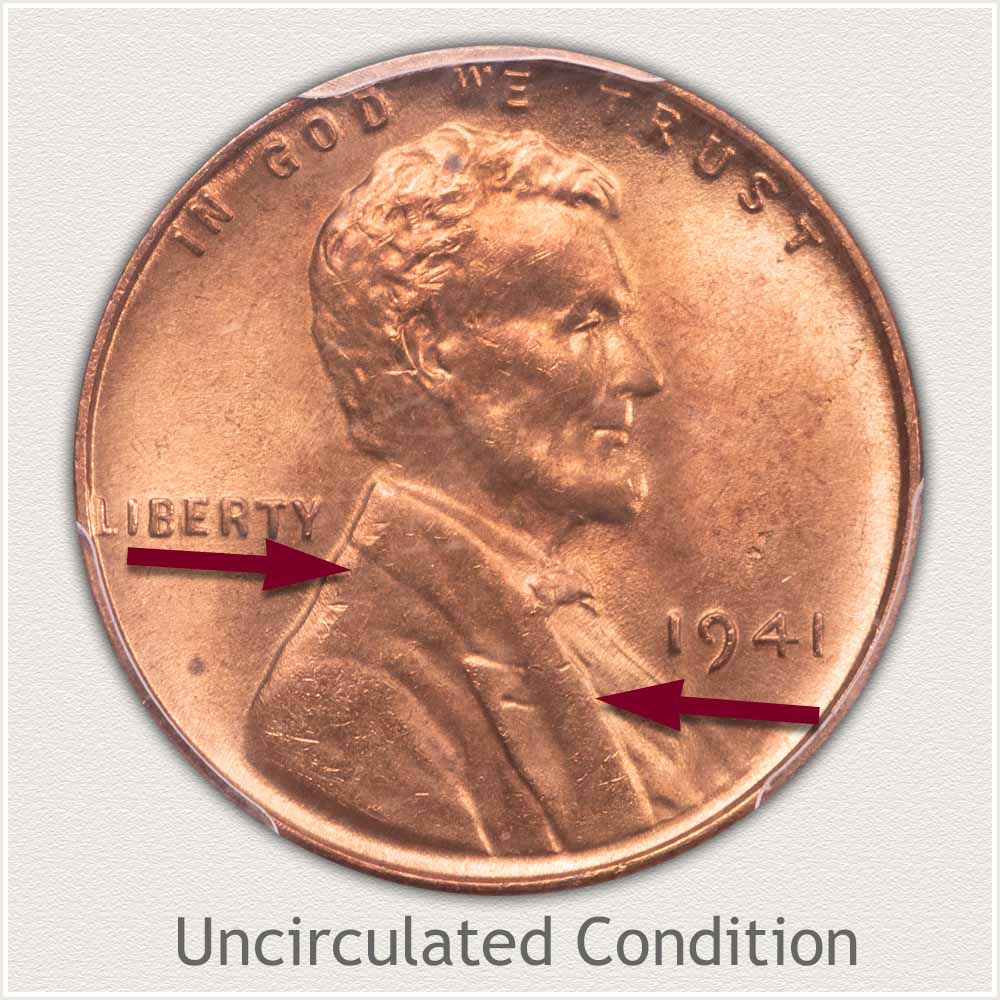
The Philadelphia mint struck the first US dime in 1796 and for the next few decades was the only mint striking dimes. By 1838 the new branch mint in New Orleans was ready to add to the supply of dimes. To identify the mint's production a 'Mintmark' was added to the design and this created the first mint marked variety dime. Mintmarks are now collected as part of sets and listed on value charts.
As branch mints were built over time and began to supply coinage, each used a mintmark to indicate their production. San Francisco was next to strike dimes in 1856 adding an 'S' mintmark to the coin. Carson City in 1871 used a 'CC' mintmark and Denver beginning in 1906 placed a 'D' mintmark on its coinage.
Date and mintmark combination are all important to recognize. Many branch mint coins are scarce due to low production. Value charts of each series reflect these scarce dimes.
🔎In Step 1 above are image links to match your coin. Visit the series page for value charts and details on how to value your old dime.
Step 3: | Grading Condition | Dime Values are Conditional
Grading condition is now the next important step to value. When originally minted, dimes exhibit no wear to the surface. Each dime is bright with luster and mark free. As the dime begins to circulate degrees of wear appear over time. These stages of wear are judged and a 'Grade' assigned accordingly to the amount of wear. An illustration of stages of wear is displayed by the coins in the image.
Mint State Grade: A dime without wear to the surface is given the Mint State grade. Luster still covers the surface and no wear has lowered the highest points of the design. A close examination is needed to judge the subtle changes in areas of the design to confirm the grade. Each series is unique to identifying mint state condition.
Extremely Fine Grade: Dimes with light wear confined to isolated areas is in the range of the Extremely Fine grade. Their condition is pleasing and crisp in detail. Lightly circulated examples are included in many dime collections. Wear appears only on the tops of the designs, in the Seated Liberty series hair detail remains along with gown details. Most dimes prior to the 1900 are scarce in lightly circulated condition and in demand.
Fine Grade: Wear is unmistakable on a dime in Fine grade. Condition of the coin is visibly worn. High relief detail is flattened and smooth, lacking fine lines. Areas of flatness typically remove contours within facial areas and hair. The Barber dime imaged above is smooth across Liberty and blending with leaves of the wreath in her hair. Moderate wear defines the Fine grade.
Good Grade: After an extended time in circulation most small details of design have worn away. If the central design is in outline form a grade of Good defines the condition. Looking at the example dime, Liberty is mostly flat with few inner details remaining. The coin however, is easily identified as to date, type and series.
Judging condition to determine a grade is accomplished by comparing your coin to images of standards, videos, and descriptions.
🔎Refer to Step 1 image and text links leading to series pages of in-depth coverage. Each dime series page covers grading in detail. Additional video helps to identify many subtle points to grading dimes.
Step 4: | Special Qualities Enhancing Value
Every dime dated 1964 and earlier has the special quality of its 90% silver content. All are worth over face value, currently 2/8/2021 each is worth $1.80 as a base to start. These silver bullion quality dimes are sought for their silver content only. Availability of the coin determines its bullion status. Roosevelt and Mercury dimes have many date and mintmark issues common in very worn grades trading at the bullion level.
It requires special qualities such a scarce dates and condition to increase values. In the Roosevelt series; Mint State grade is the major breakaway point from bullion quality. Roosevelt dimes in Mint State grade are premium value coins. Mercury dimes in Extremely Fine grade is the deciding difference to collector quality. Early era dimes are now scarce to the point few trade at bullion silver levels.
Additional special qualities raise demand and attract collectors. The vast majority of old dimes are in less than Mint State condition. Among these coins, with varying degrees of wear, an eye appeal quality is needed to stand above others.
The top row of dimes is collector quality. First dime is a circulated example of the Seated Liberty series. Lightly worn with toning highlighting the remaining detail, a strong visual appeal. The 1914 Barber dime is notable for its coloration, indicating original toning over surfaces undisturbed since removed from circulation. A Barber dime, put away long ago by a collector, it still appeals to collectors today. The third, a Mercury dime of the later years has collector and eye appeal raising its value well above minimum silver base. A bold portrait remains with just touches of wear. Traces of luster sits behind the lettering, framing central detail. An affordable collectible, elusive to find.
The bottom row of dimes is bullion quality because of aesthetic appeal. Visually not as impressive as the upper row of dimes. Each lack the eye-catching quality needed to raise appeal to attract premium values. They all compete with higher grade examples at affordable prices to collectors.
Special qualities contribute to strengthen marketability. A greater interest from large numbers of collector plus the base demand from silver content.
🔎Match your coin to the image links in Step 1 and visit; how to determine in-depth dime values of your coin.
Coin Values | CoinStudy Articles
Grading of coins is critical when determining an accurate value. Grading videos cover the Barber, Mercury and Roosevelt dime series. Images are used to compare your coins as you judge condition. Descriptions follow; highlighting the key areas deciding on grade. Approach the judging (grading) of condition conservatively to realize a fair value.
The Rare dimes article covers the high value US rarities and many other possible finds in your box of old coins. Listed are highly sought and collectible coins, value of these old dimes is often surprising.
Many of your old US silver coin values are tied closely to the price of silver. Pre 1965 silver dimes, quarters, half dollars and silver dollars are all heavy with 90% silver and worth many times their face value. With today's high value of silver; $26.90 per ounce as of 2/8/2021 your old dimes are becoming surprisingly valuable.
Recommendations on basic supplies that greatly improve coin storage. Providing for safe handling, preserving of value and organizing your box of old coins.
Selling coins for the highest price is achieved with planning. Research, organize, and value your coins accurately. Then finding and selling to the right buyer equals excellent results.
Selling your coins is always a challenge. However, you have taken big steps towards understanding what is involved in determining values of these old dimes and getting your best deal.
A step by step method combined with the coin value online guide identifies how to value a coin collection. Discover how much your box of old coins is worth.
★Coin Values Discovery finds Dime Values and..
All old US coin values. The home page is an excellent index, quickly leading to the major coin series. From Cents to Gold. Easily sort and value your coins, an important step in preparing for selling and finding coin buyers. Begin the step by step process of value to any coin series.
Penny Nickel Dime Game
Presidents on Coins: check out all the presidents on united states money coins.
Which president on Cent Coin or one Penny? Abe (Abraham) Lincoln. Presidents on Dollar Bills is all about presidents on paper money.
What is a coin? It's an object made of metal, it's usually a circle, and it's used to pay for goods and services.
Most popular coin collection released by US Mint is the 50 US State Quarter program, which ran from 1999 to 2008. Each US state received a unique quarter design.
President on penny one cent coin is Abe Lincoln
For more information on coin money, check out US Mint Website
About 50 STATE QUARTERS PROGRAM: Started in 1999 and ended in 2008.
1999 State Quarters: Delaware, Pennsylvania, New Jersey, Georgia and Connecticut.
2000 State Quarters: Massachusetts, Maryland, South Carolina, New Hampshire and Virginia
2001 State Quarters: New York, North Carolina, Rhode Island, Vermont and Kentucky
2002 State Quarters: Tennessee, Ohio, Louisiana, Indiana and Mississippi
2003 State Quarters: Illinois, Alabama, Maine, Missouri and Arkansas
2004 State Quarters: Michigan, Florida, Texas, Iowa and Wisconsin
2005 State Quarters: California, Minnesota, Oregon, Kansas and West Virginia
2006 State Quarters: Nevada, Nebraska, Colorado, North Dakota and South Dakota
2007 State Quarters: Montana, Washington, Idaho, Wyoming and Utah
2008 State Quarters: Oklahoma, New Mexico, Arizona, Alaska and Hawaii
And for Canadian Money and Coins, check out Prime Ministers on Canadian dollar bills and coins.
See all US currency uses six (6) coin denominations below: a cent/penny, nickel, dime, quarter, half-dollar and a coin dollar.
Penny Nickel Dime Meme
Pictures of Coins | |
|---|---|
President on penny / cent is Abraham Lincoln. Value of one penny is $0.01 or 1/100th of one dollar. Abraham Lincoln is also on $5 dollar bill | Picture of penny / picture of cent coin . Pictures of penny head and penny tail sides. |
President on Nickel is Thomas Jefferson. Value of one nickel is $0.05 or 5 cents or 5 pennies or 1/20th of a dollar. Thomas Jefferson is also on $2 dollar bill | Picture of nickel coin . Pictures of both nickel head and tail sides. |
President on Dime is Franklin D. Roosevelt or FDR. Value of one dime is $0.10 or 10 cents or 10 pennies or 2 nickels or 1/10th of a dollar. | Picture of dime coin . Pictures of both dime head and tail sides. |
President on Quarter is George Washington. Value of one quarter is $0.25 or 1/4th of a dollar. George Washington is the president on $1 dollar bill | Picture of quarter coin . Pictures of both quarter head and tail sides. |
President on current Half-Dollar coin is JFK - John F. Kennedy Value of one half-dollar is $0.50 or 50 cents or 50 pennies or 10 nickels or 2 quarters. All other years are commemorative and minted with pictures of other presidents, for example, Ulysses S. Grant and Benjamin Franklin, who are also president on $50 dollar bill and president on $100 dollar bill respectively |
|
President on one coin dollar is Dwight D. Eisenhower. Minted from 1971 to 1978. All other years are commemorative and minted with pictures of other presidents, for example, Andrew Jackson, James Madison and William McKinley who are also president on $20 dollar bill, president on $5,000 dollar bill and president on $500 dollar bill respectively Value of one coin dollar is $1.00 or equal to one paper dollar. | Picture of one dollar coin . Picture of both head and tail sides. |